
FAMILY OFFICE IN DUBAI — WHAT NOW?
Family Office in Dubai—what now . I Said It a Year Ago. The War Just Proved It.
In February 2025, a client (international forex group) asked me to help him establish his holding company in Dubai. I told him not to. I put my reasons in writing. Twelve months later, Iranian ballistic missiles were hitting Dubai International Airport, the Palm Jumeirah, and the Burj Al Arab. This post is not about being right. It is about what happens next — for the thousands of family offices, holding companies, and UHNW individuals who chose Dubai.
The Dubai Dream
Over the past decade, Dubai sold the world a compelling story.
Zero income tax. Year-round sunshine. a cosmopolitan lifestyle. A government that moves fast. A city that built itself from desert into a global financial hub in a single generation.
It worked. Brilliantly.
Russian oligarchs arrived after 2022 sanctions. European entrepreneurs followed, fleeing high taxes and slow bureaucracy. Crypto founders relocated en masse. Family offices set up. Holding companies were incorporated by the thousands. Private bankers opened offices on the DIFC. The narrative was unstoppable — Dubai was the new Geneva, the new Singapore, the new everything.
Between 2022 and 2024, the UAE attracted more ultra-high-net-worth individuals than any other jurisdiction on earth. The numbers were extraordinary. The confidence was total.
I was not convinced.
February 2025 — What I Told My Client
A client came to me wanting to structure his holding company in Dubai. He had been seduced by the same narrative everyone else had. Low tax. Easy setup. Great lifestyle. Access to capital.
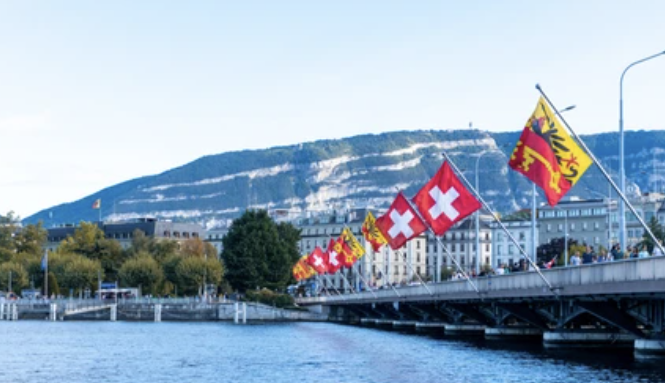
I told him to go to Switzerland instead.
Not because Dubai is not a dynamic city — it clearly is. But because when you are building a structure designed to hold and protect wealth for fifteen to twenty years, the question is never where is exciting today. The question is where will still be reliable, legally credible, and physically safe in 2040.
My reasons were structural. Not emotional.
Banking friction. Despite the UAE’s progress on AML reform, international correspondent banks continued applying enhanced scrutiny to UAE-based structures. Opening accounts, moving money internationally, and getting counterparties comfortable with a Dubai holding company remained slower and more expensive than it should be.
Regulatory volatility. Corporate tax was introduced. Free Zone rules were changing. Substance requirements were tightening. The regulatory environment that attracted founders in 2018 was not the same environment they were operating in by 2025.
Perception gap. The international compliance community — banks, law firms, institutional investors — continued to treat UAE structures with a level of scrutiny that Swiss or Singapore structures do not attract. Perception lags reality. In compliance, perception is reality.
Long-term valuation. A Swiss holding company commands a structurally higher valuation at exit than a UAE equivalent. For a client planning to sell his group in ten to fifteen years, jurisdiction of incorporation is a material factor in deal value.
And above all — geopolitical exposure.
Dubai sits across a narrow stretch of water from Iran. The UAE had spent years managing a fragile diplomatic balance — trade ties with Tehran, US military bases on its soil, Israeli normalisation through the Abraham Accords, and a rapidly evolving regional security environment.
I told my client that this balance was inherently unstable. That it rested on assumptions that could be invalidated by a single event. That the UAE’s geographical position was not a risk that could be diversified away.
He moved his structure to Switzerland.
March 2026 — What Happened
On 28 February 2026, the assumptions collapsed.
Following US and Israeli strikes on Iran that killed Supreme Leader Ali Khamenei, Iran launched one of the largest missile and drone barrages in modern history — targeting not just US military bases but civilian infrastructure across the Gulf.
The UAE bore the brunt.
Iran fired 357 ballistic missiles, over 1,800 drone attacks, and cruise missiles at targets in the UAE. Dubai International Airport was struck by a drone, forcing evacuation and closure. A Shahed drone struck near the Fairmont The Palm Hotel on Palm Jumeirah. Jebel Ali Port — the largest port in the Middle East — caught fire. The Burj Al Arab was damaged by debris from intercepted missiles. Wikipedia
An Amazon Web Services data centre in Dubai was struck by shrapnel from an intercepted Iranian drone — potentially the first time in history that a major cloud data centre was damaged in war. UAE stock exchanges suspended trading. Banking and real estate stocks fell sharply. Foreign Policy
Airspace closures across the Gulf led to over 4,000 daily flight cancellations. Expected losses from tourism and aviation alone reached $40 billion. Videos of explosions over Dubai’s skyline — the same skyline that had been sold to the world as the symbol of Gulf stability — circulated globally within hours. Middle East Council on Global Affairs
The UAE had spent decades fostering Dubai’s global reputation as an oasis of stability. That reputation is a keystone of the UAE’s entire economic model — more than three quarters of GDP comes from non-oil sectors entirely dependent on that image. Iran knew exactly where it was striking. Atlantic Council
What Happens Now — For the Family Offices That Stayed
This is the question that matters. Not the geopolitics. Not the missiles. The practical, immediate question facing thousands of family offices, holding companies, and UHNW individuals who built their structures in Dubai over the past decade.
The banking question. International correspondent banks — already cautious about UAE structures — are now reassessing country risk exposure to the Gulf. Compliance teams are updating their risk models. Enhanced due diligence on UAE-domiciled entities will increase, not decrease, in the coming months. The FATF delisting progress of 2024 has been set back by the reputational damage of war.
The operational question. If your holding company is in Dubai and your key staff, your documents, your physical infrastructure, and your banking relationships are disrupted by an ongoing military conflict — what is your business continuity plan? Most family offices did not have one for this scenario because most family offices assumed this scenario was impossible.
The valuation question. A holding company in a jurisdiction that has been struck by ballistic missiles is worth less than it was three months ago. Not because the legal framework changed. Because jurisdiction risk is now priced into every buyer’s assessment. Any M&A transaction involving a UAE-domiciled holding entity will now carry a geopolitical risk premium that did not exist in January 2026.
The exit question. For founders and investors who planned to sell in five to ten years — the jurisdiction of their holding company has just become a negotiating point. Buyers will ask. Lawyers will flag it. Deal valuations will reflect it.
The personal question. Hundreds of thousands of UHNW individuals, their families, and their employees live in Dubai. The city absorbed hundreds of missiles and drones. Most were intercepted. But interception debris fell on Palm Jumeirah. On Dubai Marina. On Al Barsha. There is no elegant way to frame this — families were frightened. Some have already left.
The Hard Truth About “Safe Havens”
A safe haven is not a place that has never been attacked. It is a place that is structurally unlikely to be attacked — ever.
Switzerland has not been involved in a war in over 200 years. It has no military alliances that make it a target. It has no territorial disputes. It has no US bases. It has no geopolitical exposure that connects it to the conflicts of the Middle East, Eastern Europe, or Asia.
It is not neutral because it is passive. It is neutral by design, by constitution, and by strategic choice maintained across centuries of European conflict.
Singapore occupies a similar position in Asia — a small, highly stable, strategically neutral city-state that has made itself indispensable to all parties and therefore a target to none.
Dubai tried to be this. It largely succeeded — for a long time. The Abraham Accords, the economic opening, the diplomatic balancing act between Washington and Tehran — it was an extraordinary achievement of soft power.
But soft power has limits. And when Iran decided to cause maximum economic pain to the US and its allies, it knew exactly where to strike.
What Should You Do Now?
If your holding structure is in Dubai, this is not the moment for panic. It is the moment for a structured review.
Ask the following questions:
Can I move my holding structure to a more stable jurisdiction — Switzerland, Singapore, or Luxembourg — without triggering adverse tax consequences? In most cases, with proper planning, the answer is yes.
Are my banking relationships at risk? Review your correspondent banking arrangements and assess how your UAE domicile is now being evaluated by your banks.
What is my business continuity plan if the conflict escalates? If you do not have one, you need one now.
What does my exit strategy look like with a UAE holding company versus a Swiss one? Model both scenarios with your advisors.
Are my family members safe, and do I have a secondary residence plan? This is no longer a hypothetical question.
The Conclusion — Same As February 2025, With More Evidence
I told my client a year ago that the UAE’s geopolitical position was its fundamental weakness as a long-term holding jurisdiction. Not its tax regime. Not its legal system. Not its lifestyle. Its geography.
Geography does not change.
Switzerland is where it has always been. In the middle of Europe. Surrounded by mountains. Far from every active conflict zone on earth. Operating under a legal system that has not changed materially in a century. Home to private banks that have been holding family wealth across generations for 200 years.
It is not exciting. It is reliable.
For wealth that needs to survive fifteen years, twenty years, a generation — reliable beats exciting every time.
If you are reviewing your holding structure in light of current events
or if you are advising clients who are — we are available for a confidential conversation.
📩 insight@venturecapitalstudio.com 🌐 venturecapitalstudio.com 📞 +41 787 983 770
Venture Capital Studio · FintechLex Geneva · Hong Kong · London
This post reflects the professional opinion of the author based on publicly available information and personal experience. It does not constitute legal, tax, or investment advice. Jurisdiction selection should be assessed with qualified legal counsel on a case-by-case basis.
